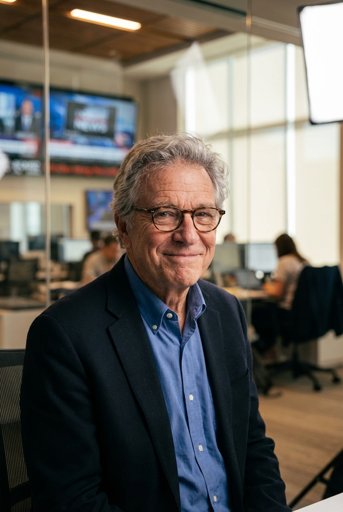
In an industry that rewards self-promotion, David Chen is an anomaly. The founder and CEO of the Archon Institute has led one of the mid-Atlantic's most respected defense research organizations for twelve years while maintaining a public profile so low that many people in the defense community know his organization's name but not his face.
Chen, 58, was born in Taipei and moved to the United States at age twelve when his father, a semiconductor engineer, took a position at Texas Instruments. He studied physics at MIT, earned a doctorate in applied mathematics from Caltech, and spent two years as a postdoctoral researcher at Lawrence Livermore before pivoting to government service.
His government career spanned fifteen years, nearly all of it at DARPA, where he rose to become a program manager in the Strategic Technology Office. Colleagues from that era describe him as "relentlessly analytical" and "allergic to imprecision." He managed programs in strategic threat assessment and predictive modeling — the kind of quiet, foundational work that rarely makes headlines but shapes how the defense establishment thinks about emerging challenges.
"If he's opening up Archon, it's because he's thought three moves ahead and decided it serves the mission."
Former DARPA colleague, speaking on condition of anonymityHe left DARPA in 2014 to found the Archon Institute with a simple thesis: the defense community needed an organization that could do long-horizon strategic research without the institutional constraints of a government lab or the quarterly earnings pressure of a defense contractor. He named it after the Greek word for "leader" or "ruler" — but colleagues say he intended the more obscure meaning: "first principle."
Archon started with eight people in a rented office in Crystal City. Today it employs over one hundred researchers, analysts, and support staff across its Arlington campus. The Institute's research spans strategic foresight, defense technology assessment, AI safety in military applications, and allied cooperation frameworks.
Chen's management style is delegation-heavy. He hired Dr. Elaine Morrow as Chief Strategy Officer to handle the organization's external partnerships and strategic direction. He hired Lisa Yun, a former FBI cyber investigator, to run information security — a function most organizations Archon's size wouldn't elevate to the executive level. And he recently created a communications director position, hiring Nora Tanaka from RAND to lead what appears to be a deliberate public engagement campaign.
Those who know Chen say the transparency push is genuine but calculated. "David doesn't do things reactively," said a former DARPA colleague who spoke on condition of anonymity. "If he's opening up Archon, it's because he's thought three moves ahead and decided it serves the mission."
Chen declined to be interviewed for this article. But the portrait that emerges from two dozen conversations with colleagues, competitors, and former government partners is remarkably consistent: a leader who prizes precision over persuasion, delegation over